
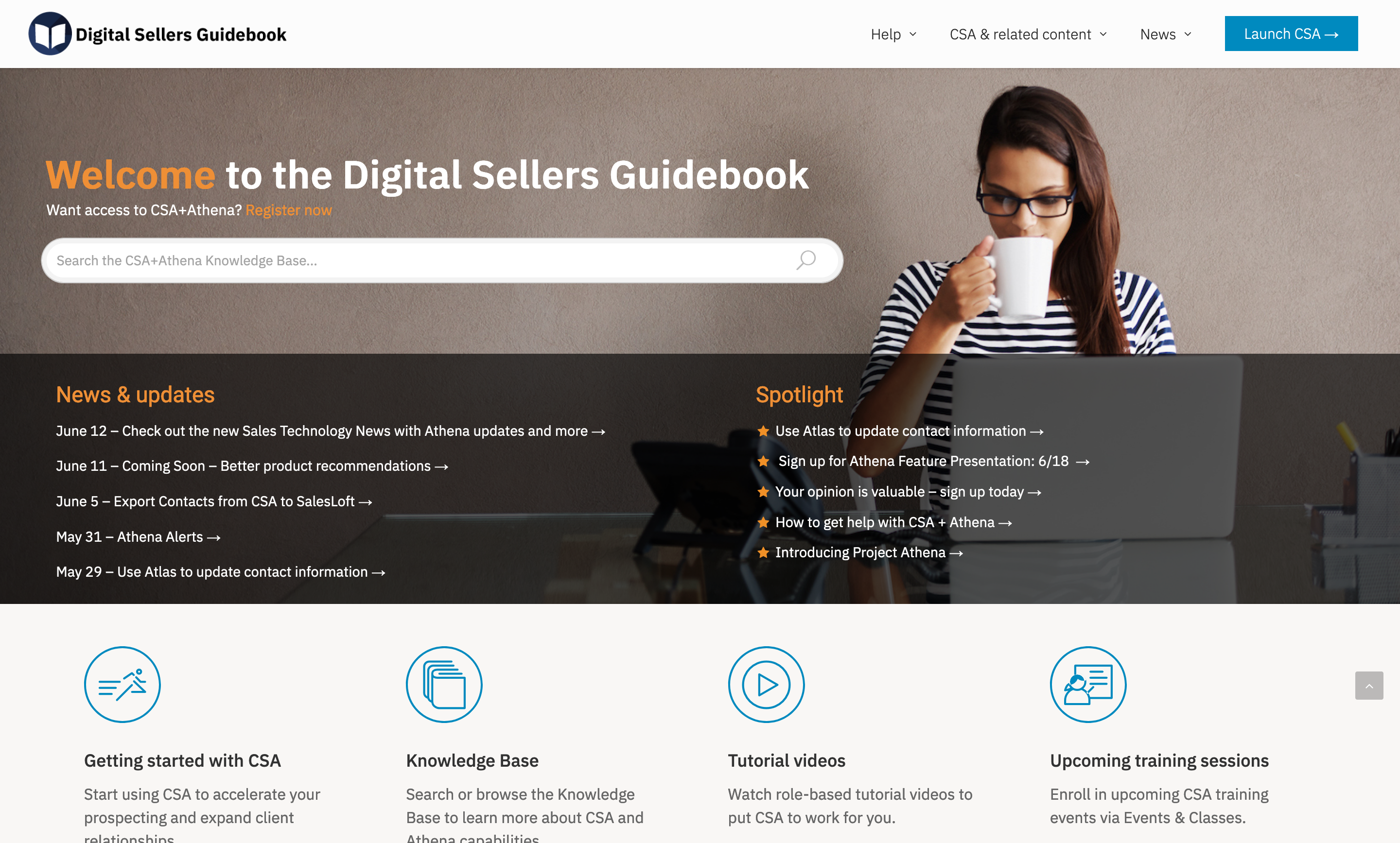
The problem
IBM's Cognitive Sales Advisor platform was designed to improve selling, but the experience asked sellers to absorb another tool while they were focused on closing deals. Managers were expected to encourage adoption without having a simple way to demonstrate the platform's value. The problem was not awareness alone; it was the lack of a low-friction path from a seller's immediate goal to useful guidance.
The key design decision: the guidebook was organized around how sellers and managers needed to use the platform — product pages made value easier to explain, role-based knowledge content reduced irrelevant reading, and the video library was searchable by user goal. That structure turned a broad adoption problem into a resource people could use inside their existing workflow.
Process
I conducted stakeholder interviews with sellers and managers to understand the barriers to adoption, which surfaced the real constraint: high cognitive load and limited time for training, not a lack of awareness. WordPress was the deliberate technical choice — it allowed easy integration with existing IBM tools rather than adding another system for sellers to learn.
Steps:
- Research and analysis — Stakeholder interviews with sellers and managers surfaced the real barriers: high cognitive load, limited time for training, and a lack of clear, accessible resources. Existing workflows and tools were analyzed for integration opportunities.
- Content strategy — Built around three pillars: product pages (features, benefits, seller testimonials), a knowledge base segmented by role (general users, enterprise sellers, other specific roles), and a video library organized and searchable by user goals.
- Prototyping and testing — Wireframes and interactive prototypes were tested with sellers and managers; feedback shaped navigation, content layout, and search functionality before launch.
- Development, launch, and iteration — Built on WordPress in collaboration with developers for seamless integration with existing IBM tools, then launched after QA testing. Post-launch, content continued to expand to support new initiatives and evolving user needs.
Tradeoffs: WordPress was chosen for tool familiarity and integration, not for being the most powerful platform available — the tradeoff was accepting its constraints in exchange for a resource sellers and managers could actually adopt inside their existing workflow.
A design correction: the video index
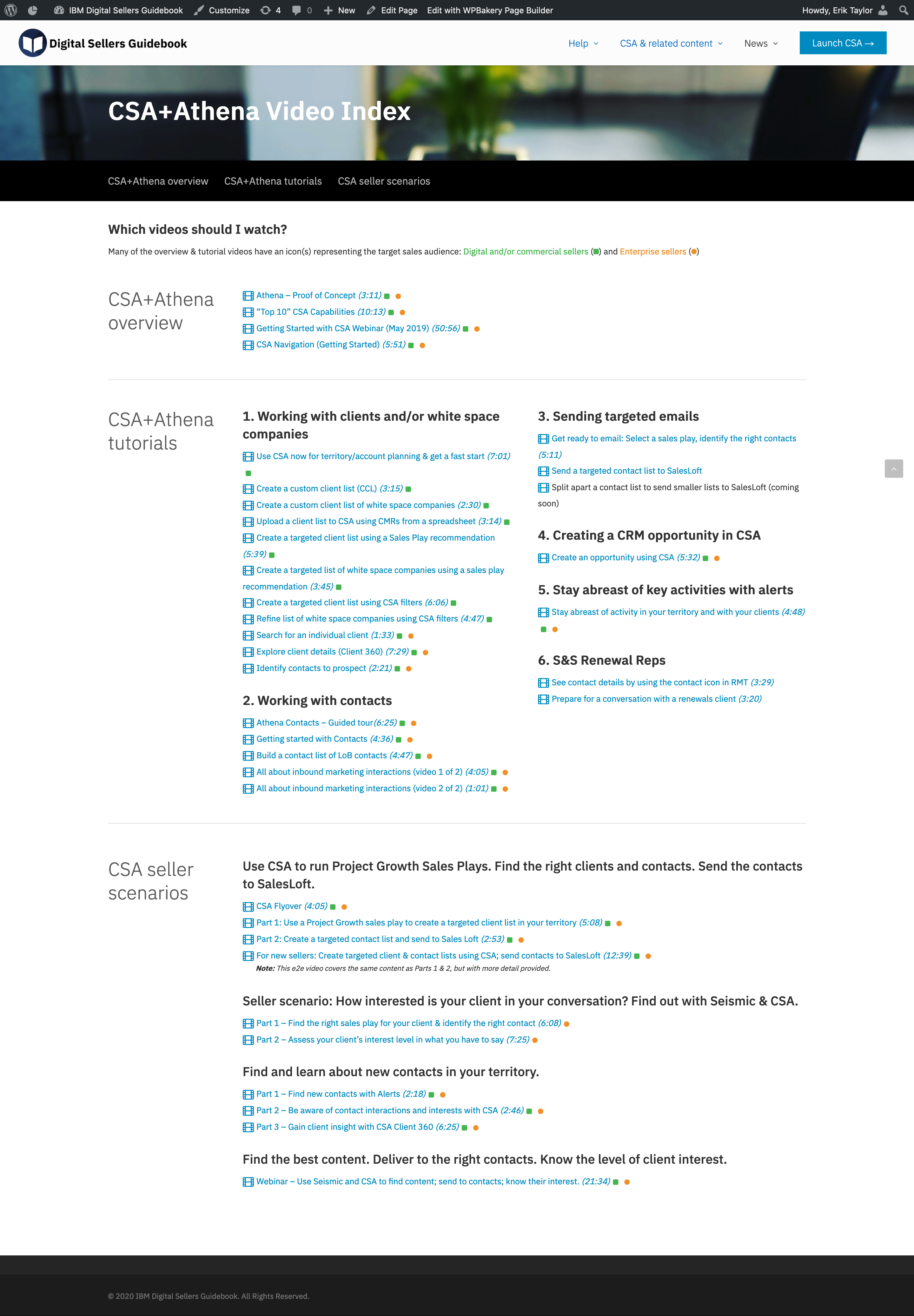
My first design for the video library was visually rich. I focused on making the media feel inviting, but I missed the job sellers needed it to do: help them find the right video quickly. They wanted a simple text sheet with just enough wayfinding to tell which lesson was relevant.
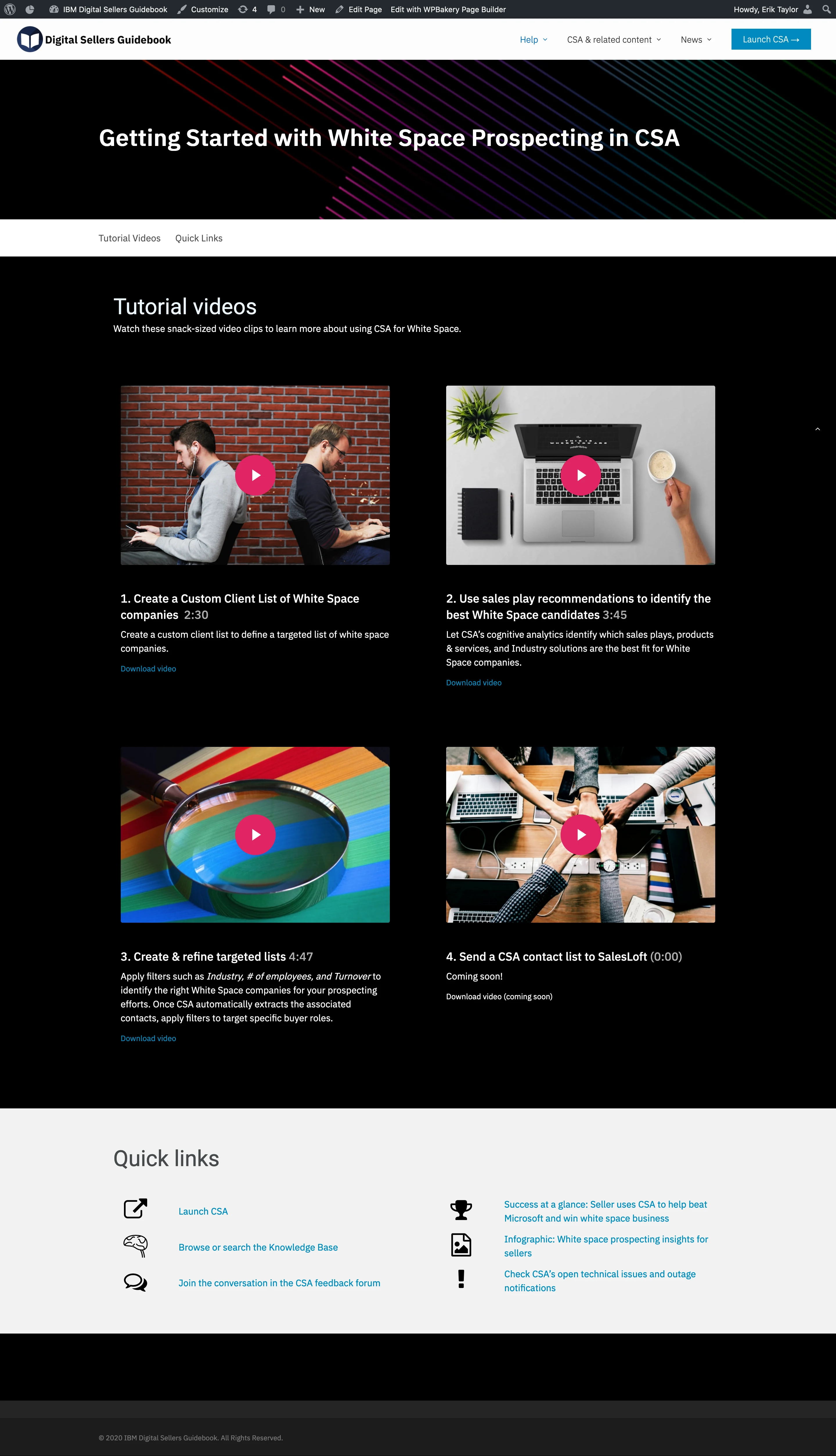
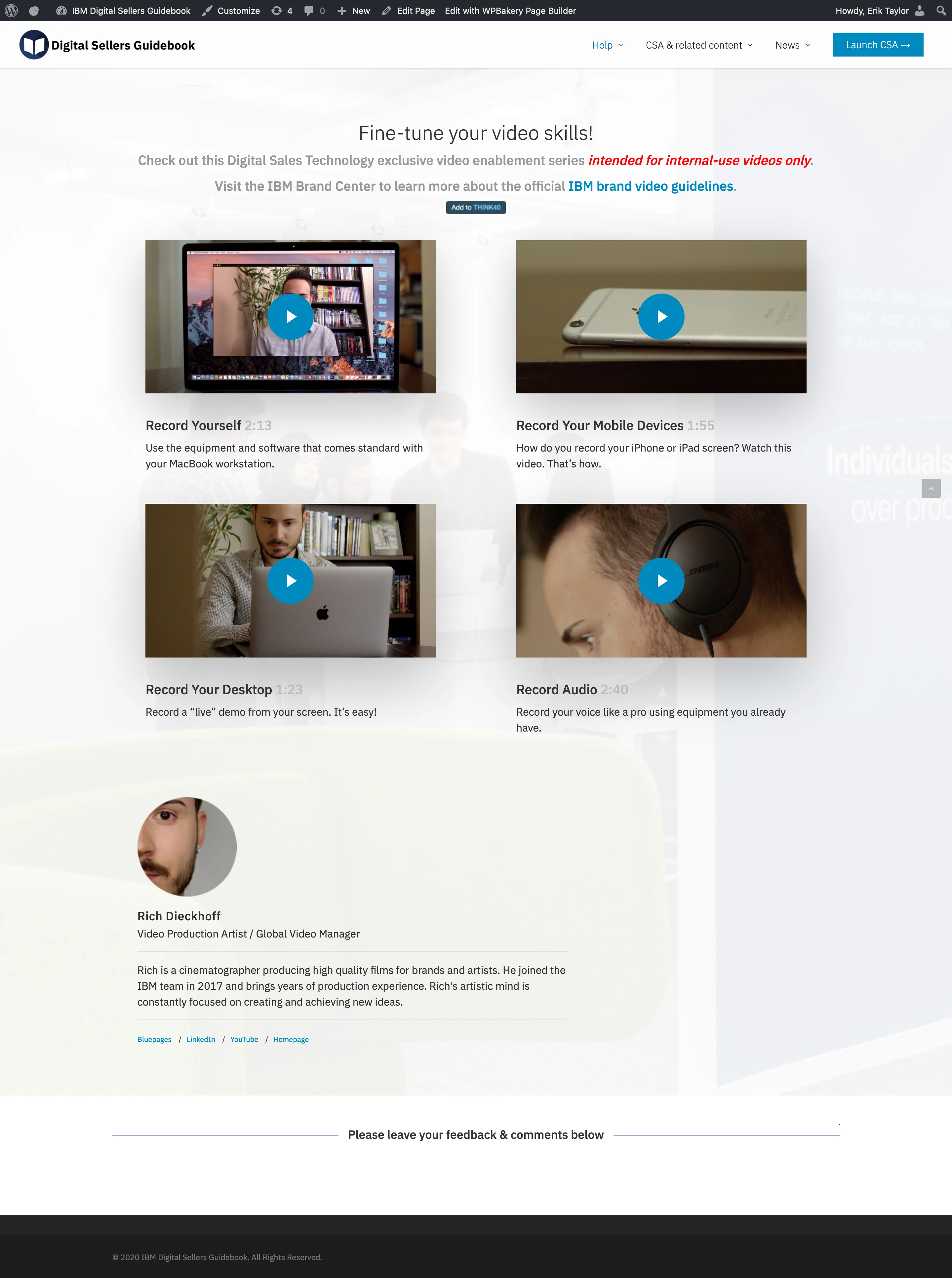
I changed the direction to a text-first index grouped by seller task. Video titles and durations made the list easy to scan, while small color-coded tags identified the intended audience. The screenshot below shows that simpler approach. It is a useful reminder that visual polish only helps when it serves the way people actually work.
The index sellers asked for
The task-grouped list below replaced my initial visual-media direction in the design process. Open the capture to read the full index.
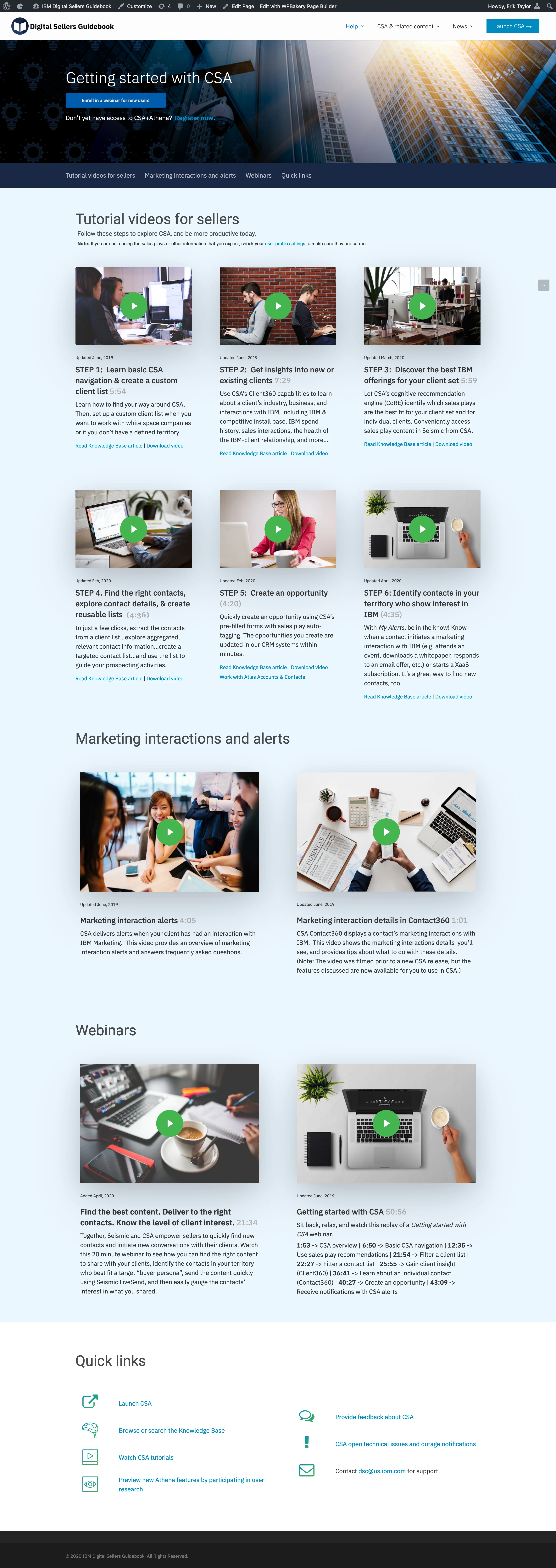
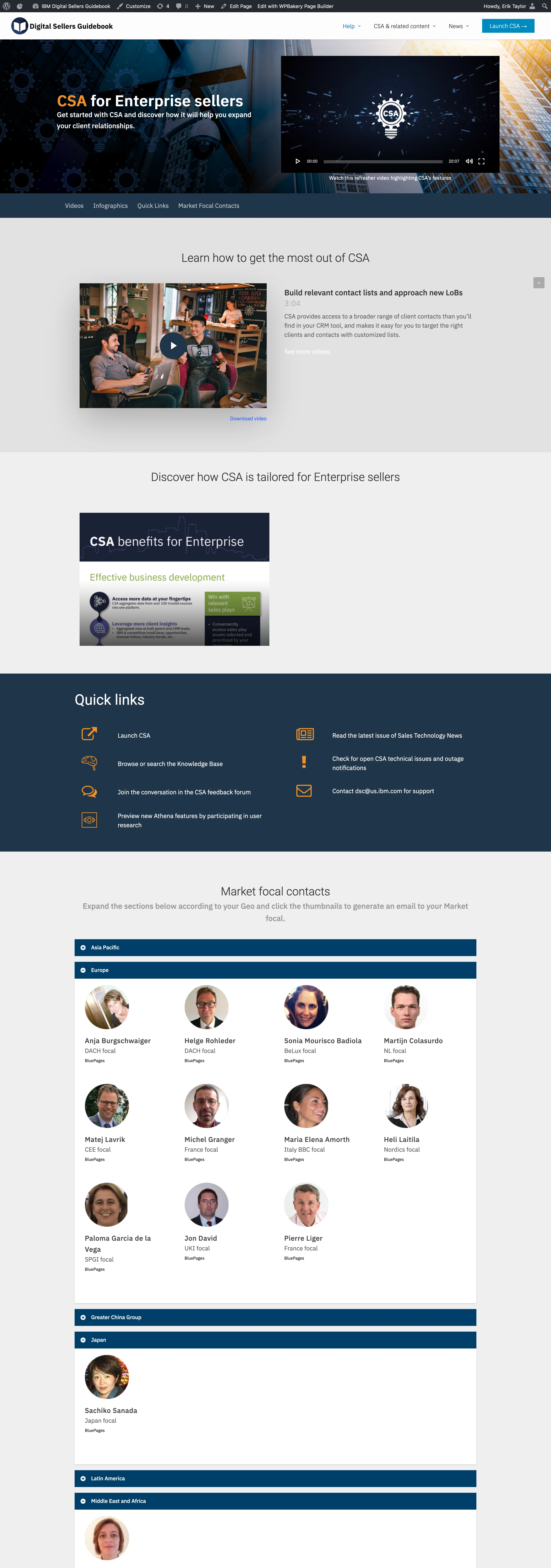
Pages I designed for different seller tasks
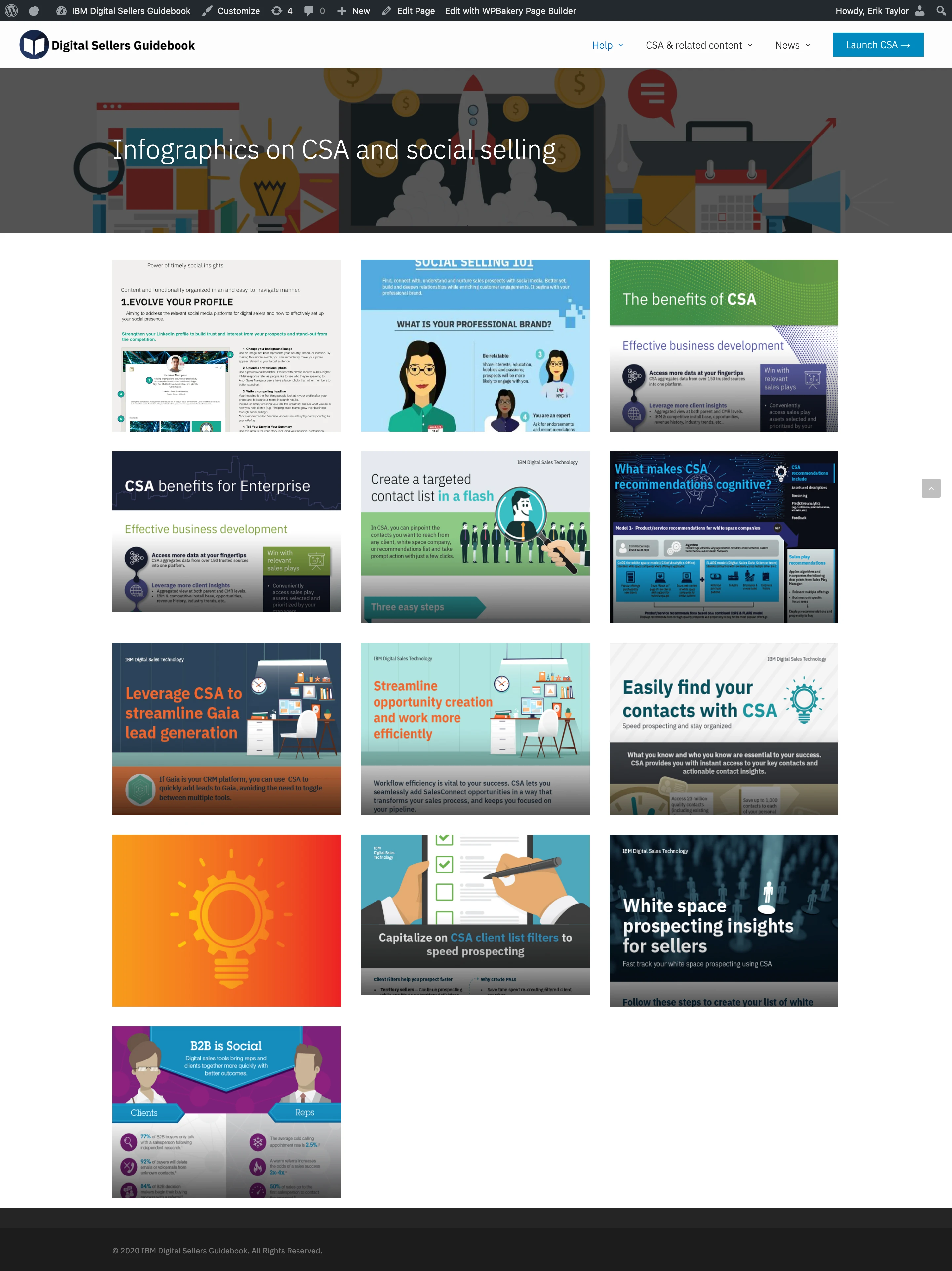
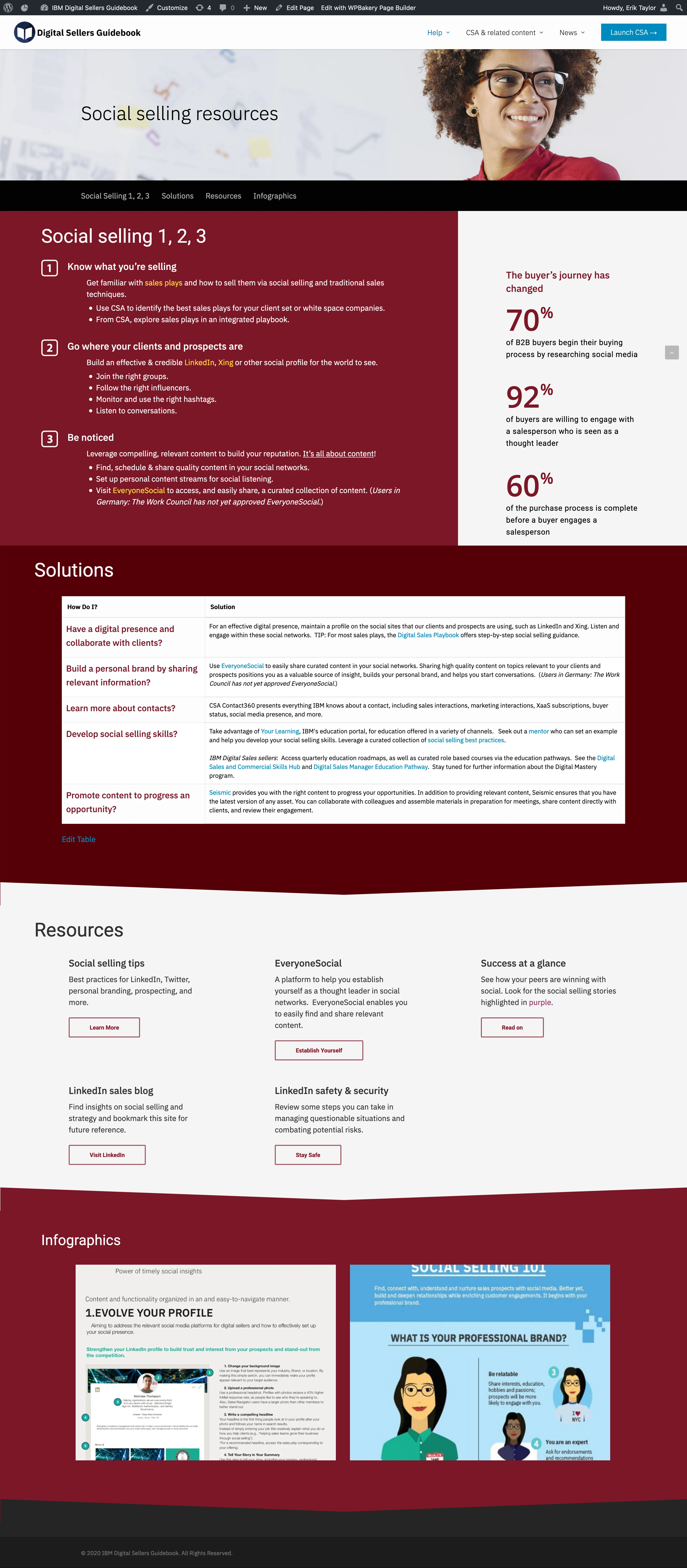
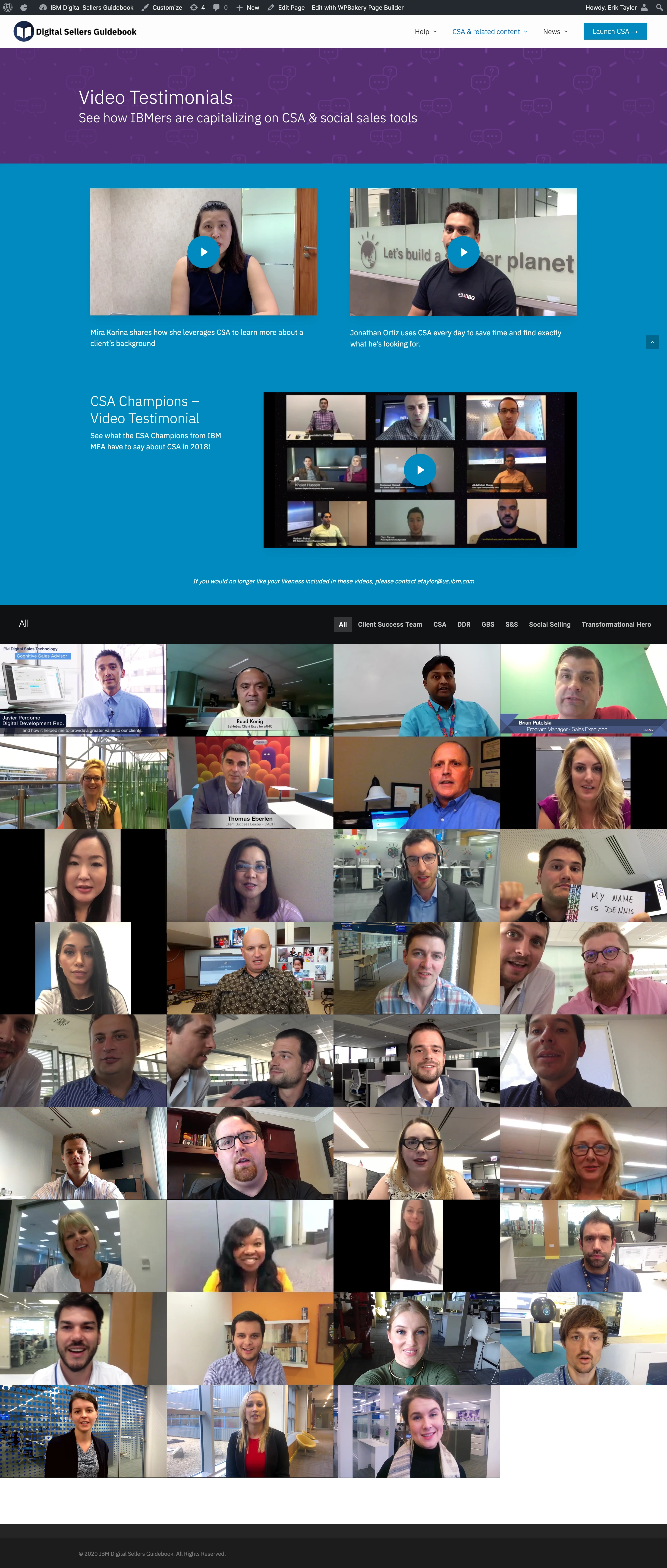
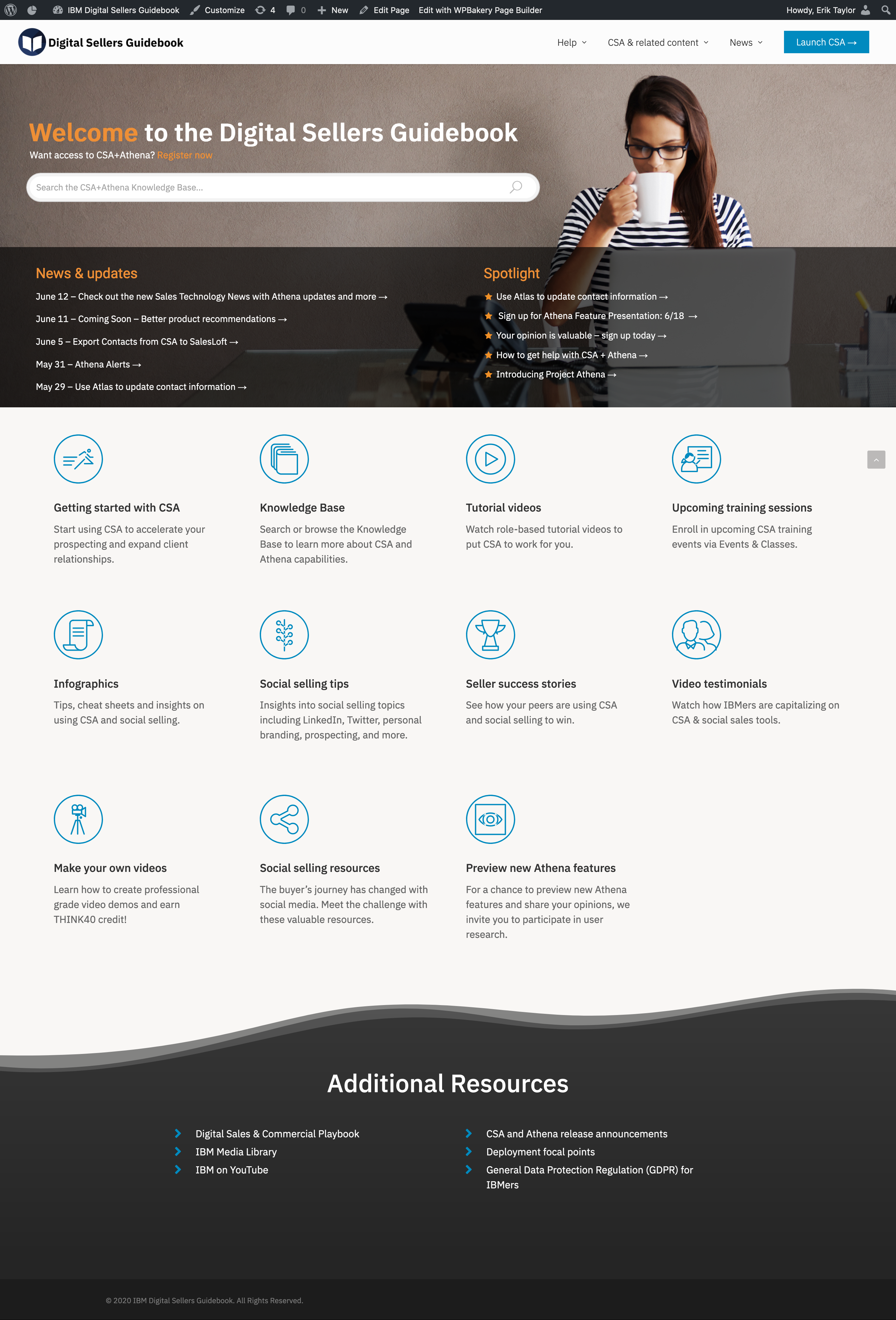
Seven Guidebook pages show onboarding, role-specific learning, visual resources, and seller stories. Open any capture to explore the full page.
View the complete Guidebook homepage
The full-page capture shows the resource structure below the opening screen.
What it surfaced
This case study reports directional evidence from the source material, not an independently verified percentage: no adoption percentage was tracked, and none is claimed here.
Factors:
- Reported adoption signal — The original case study describes a noticeable uptick in Cognitive Sales Advisor usage among both managers and sellers — a directional observation, not a measured percentage.
- Executive recognition — The guidebook was praised as IBM's most comprehensive internal resource for sellers.
- Sustained engagement — Content expansion after launch supported new initiatives and adapted to evolving user needs.
Lessons
- Cognitive load, not awareness, was the real barrier. Sellers weren't unaware of the platform — they were focused on closing deals and had no bandwidth for anything that felt like extra training. Simplifying the path to value mattered more than promoting the platform harder.
- Content strategy is a design decision, not an afterthought. Segmenting the knowledge base by role and organizing the video library by user goals, rather than shipping one undifferentiated resource, is what made the guidebook usable across a diverse seller and manager audience.
- A scannable index beat my first media-library design. Sellers needed to locate a relevant lesson, not browse a visually rich gallery. Their feedback shifted the video index toward task groupings, readable titles, and light audience tags.
- Iteration kept the resource relevant after launch. Continuing to gather feedback and expand content post-launch — rather than treating launch as the finish line — is what let the guidebook adapt to new initiatives instead of going stale.
FAQ
Did the guidebook measurably increase adoption? The original case study reports a noticeable uptick in usage and recognition as IBM's most comprehensive internal resource for sellers, but no specific adoption percentage was tracked or verified — this case study does not claim one.
Why WordPress instead of a more specialized platform? Tool familiarity and integration with IBM's existing systems — sellers and managers could adopt a resource built on a platform their teams already knew, rather than learning something new on top of the platform they were already resisting.