
The problem
WFG 365 launched in 2023 as the successor to Pulse — the mobile app that WFG's 100,000+ agents had built their daily workflow around for years. The new app was built for agents in the field. The problem was that it wasn't built for the agents who actually ran the field.
Senior leaders — the producers who drove recruitment and retention for entire downlines — couldn't run their business from WFG 365. The paycheck tabs they used daily (Personal, Base, Superbase, Super Team) were gone. Commission comparisons, compact shareable reports, team-level metrics — removed. The app looked newer. It worked worse for the people who mattered most. "People love Pulse. People will buy old phones that had Pulse on them, or not change their phones, so they could still use Pulse." That wasn't nostalgia. It was a product indictment.
The action
I led field research at a Denver meeting in June 2023 with three of WFG's top-producing leaders. The session surfaced what the product team hadn't heard clearly enough — that the adoption failure wasn't resistance to change, it was a feature gap that made WFG 365 functionally useless for the leaders who were supposed to champion it. This was directional field research with three leaders, not a population-wide measurement; its value was identifying the missing workflows that the original launch research had not represented.
Steps:
- Field research (June 2023) — A Denver meeting with three top-producing leaders across experience levels and business sizes surfaced the real gap: senior leaders couldn't run their business from WFG 365.
- Prioritized feature brief — Translated the session into a prioritized brief: specific requests incorporated into the redesign (paycheck tabs at the bottom navigation, team points and recruits tabs, compact reports formatted for screenshot and forward), plus additional items logged into the backlog with rationale. This separated immediate launch-critical gaps from follow-up opportunities.
- Wireframe review with agents — On October 12, 2023, presented updated wireframes to agents before development handoff — a step that hadn't happened for the original launch and was explicitly called out as what should have occurred.
Tradeoffs: The original launch had been validated with one type of agent and deployed to a much wider group with different needs. The fix wasn't a redesign from scratch — it was going back to the people the first round of research had missed.
The mobile designs
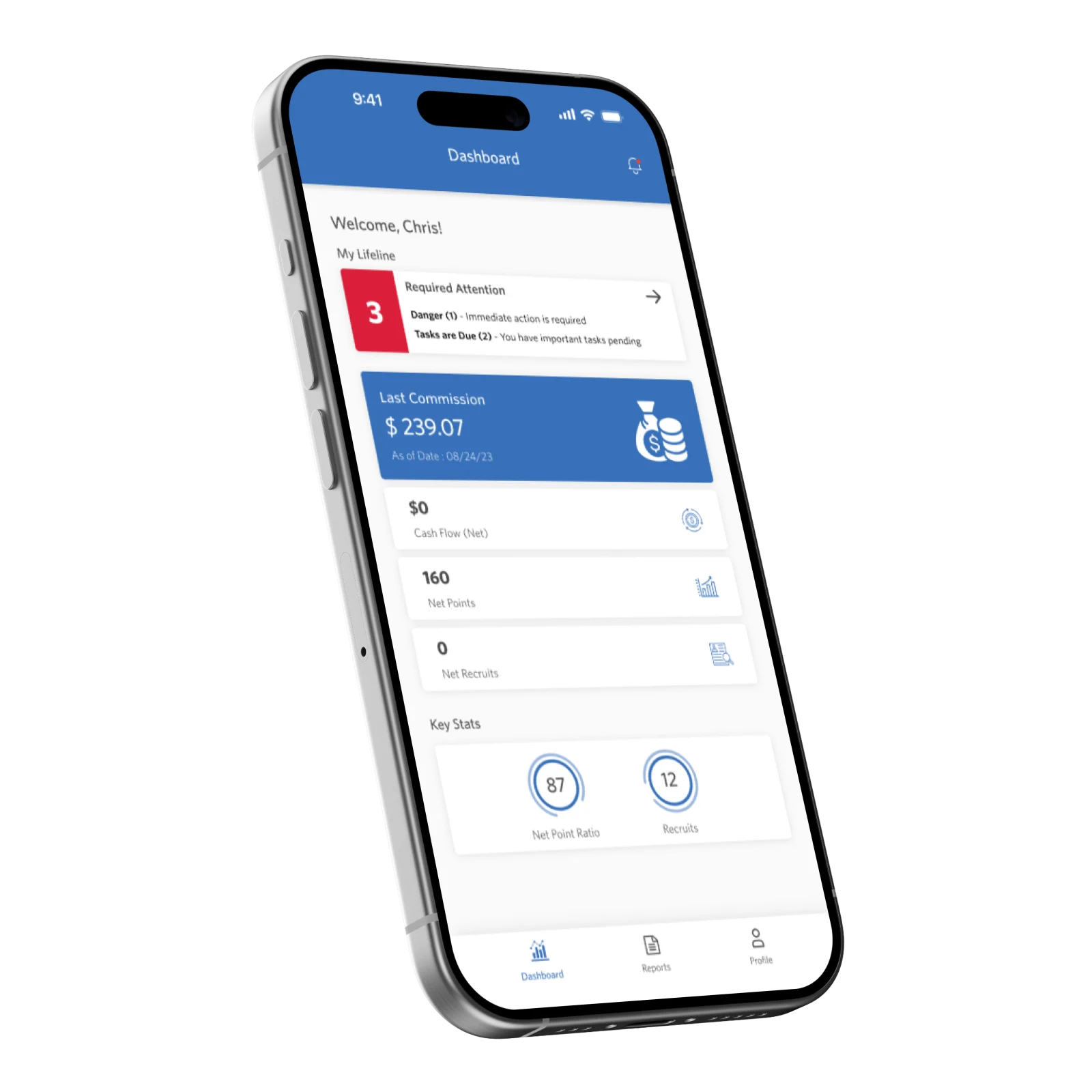
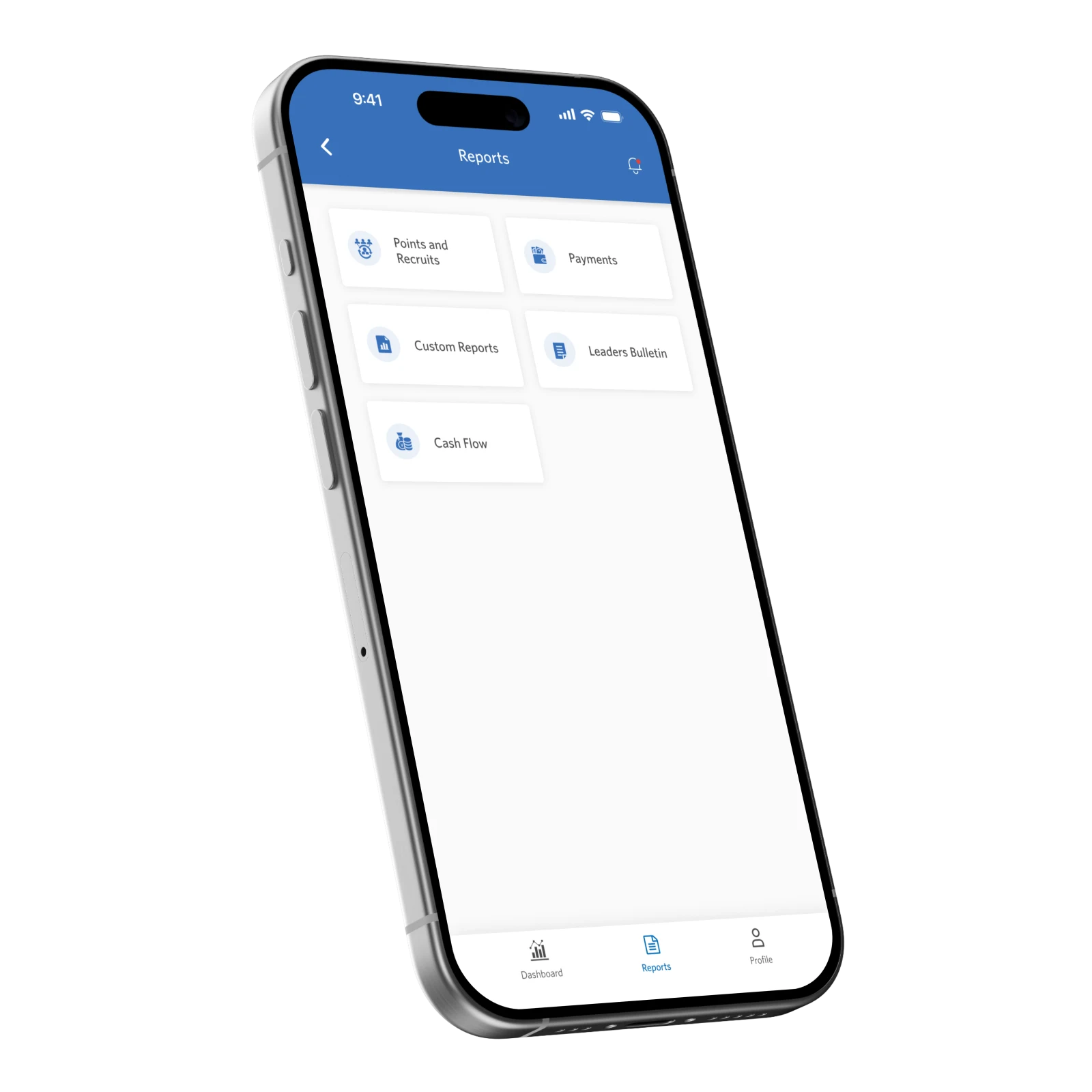
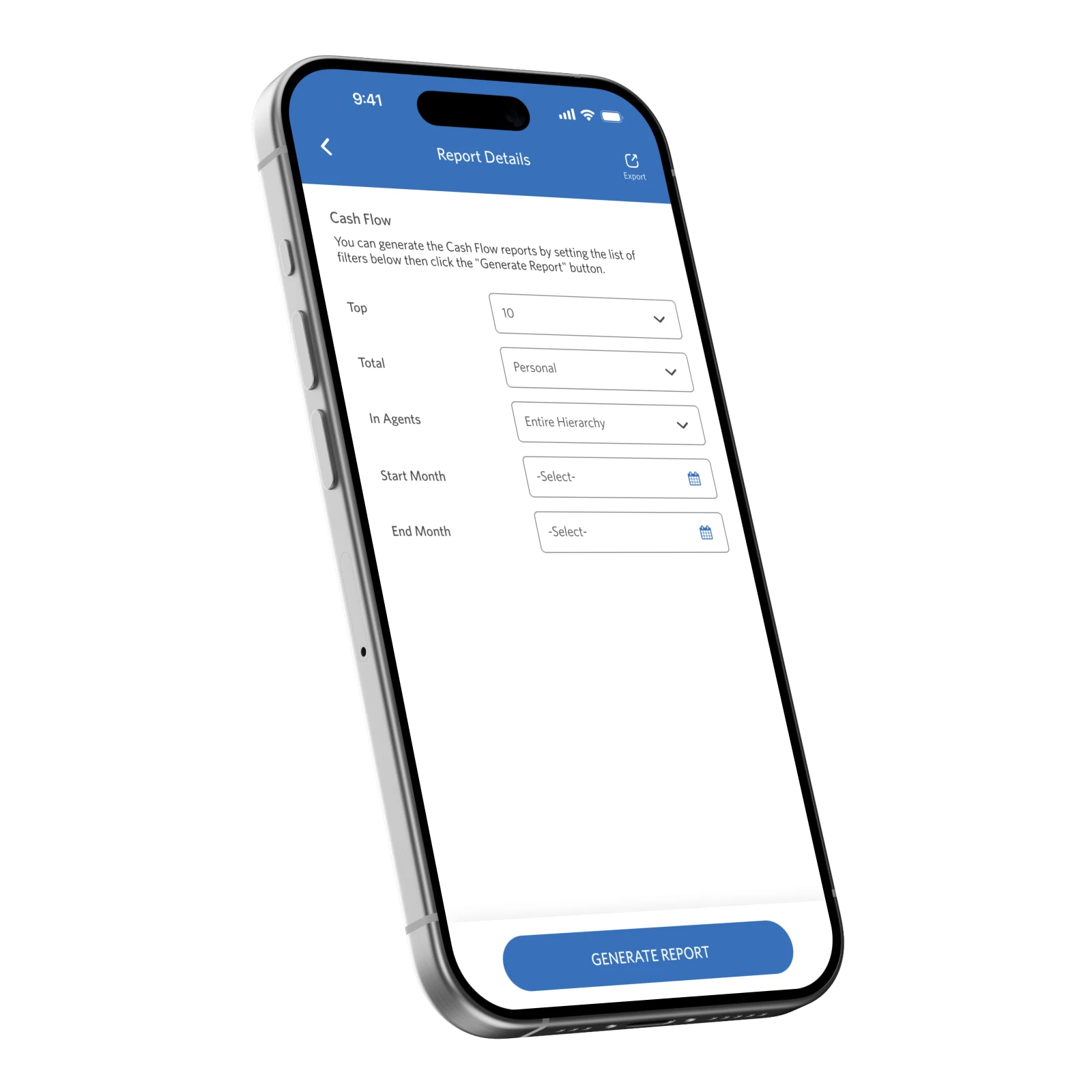
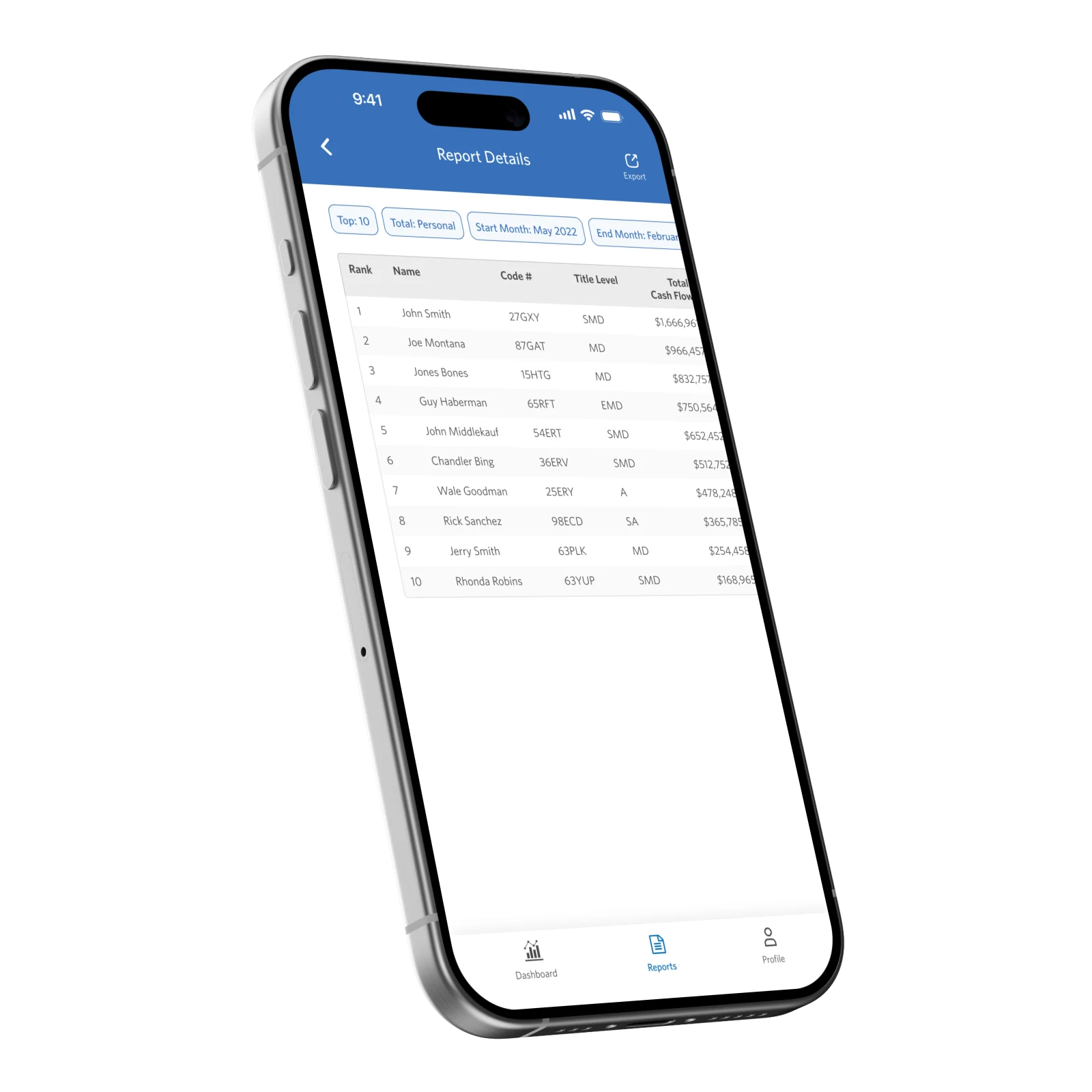
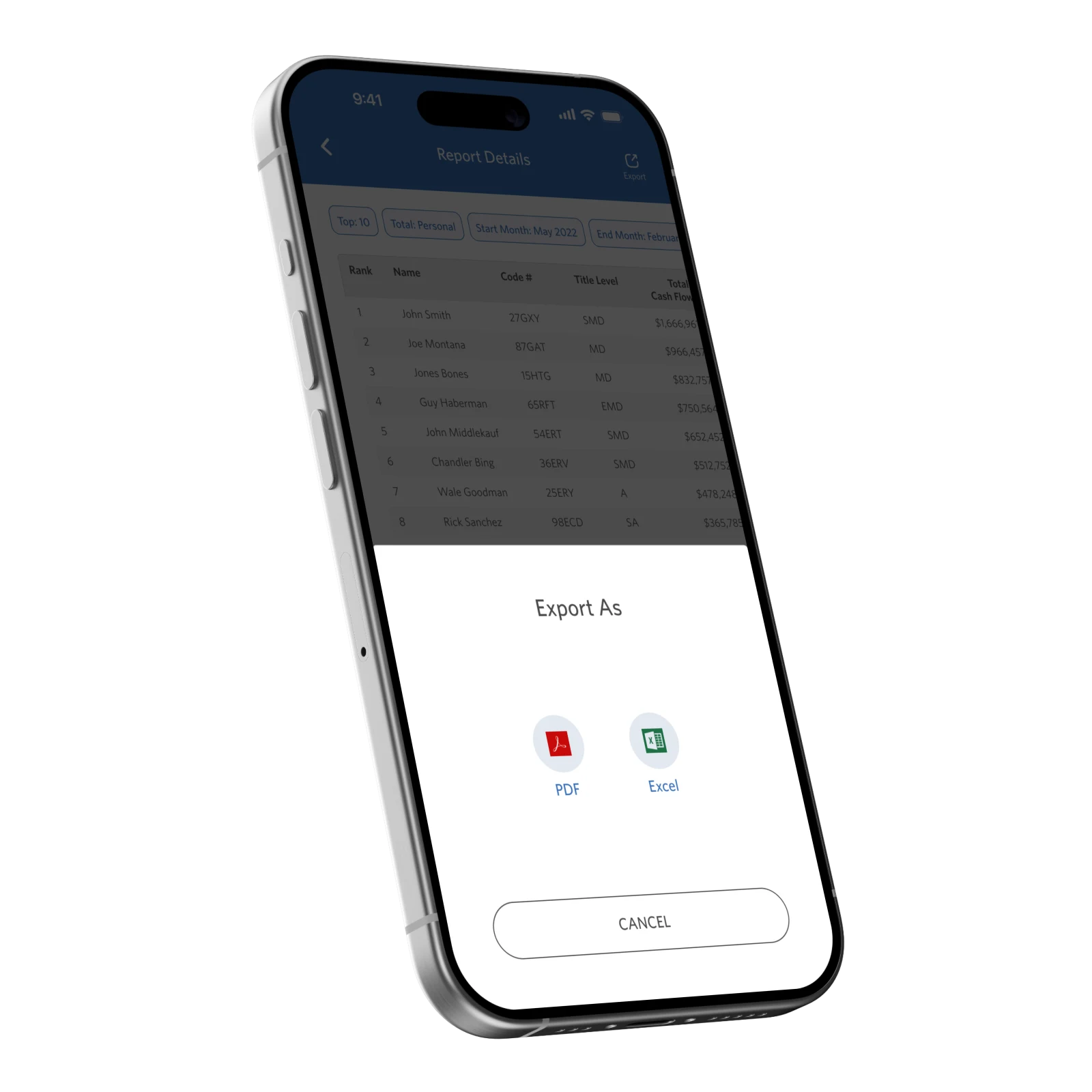
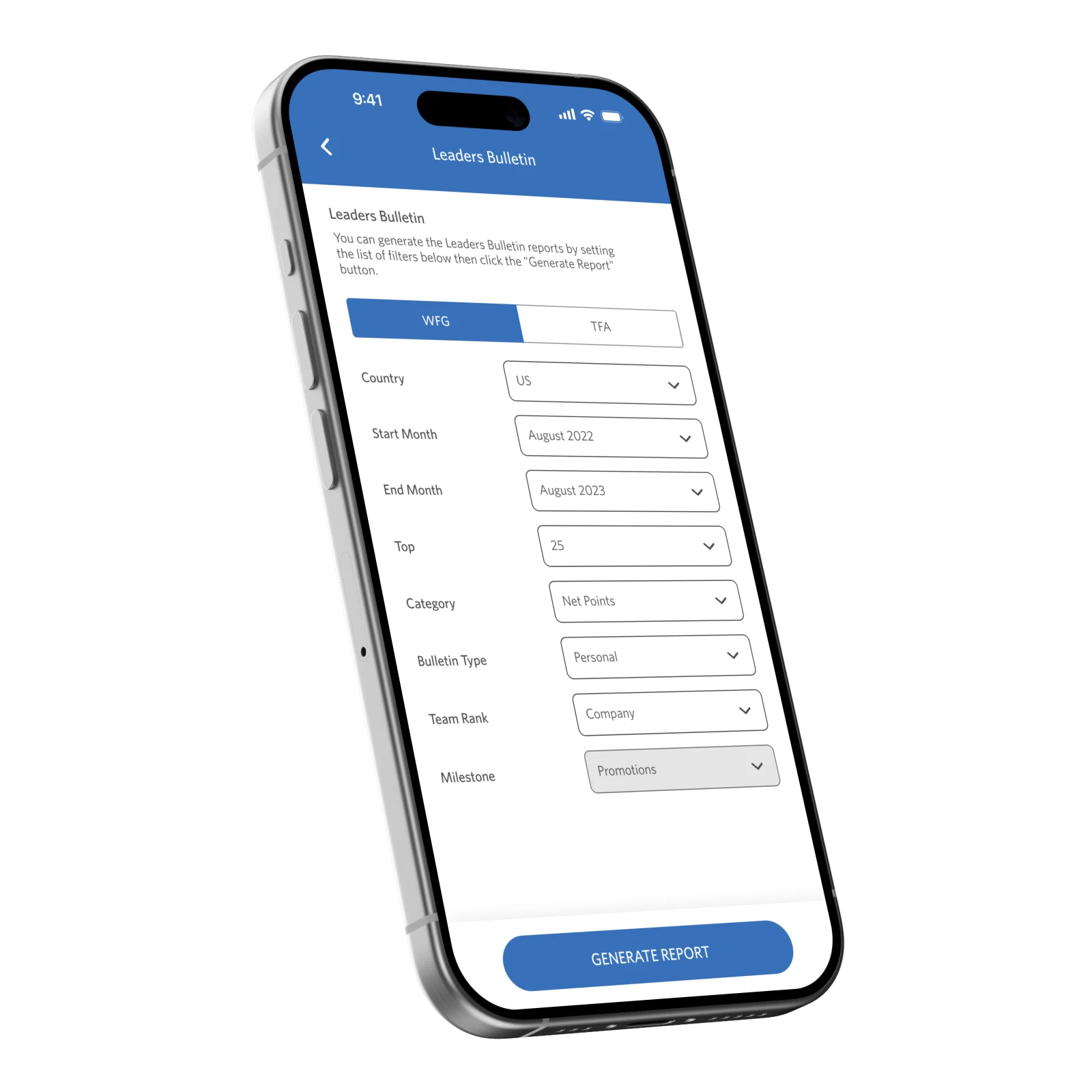
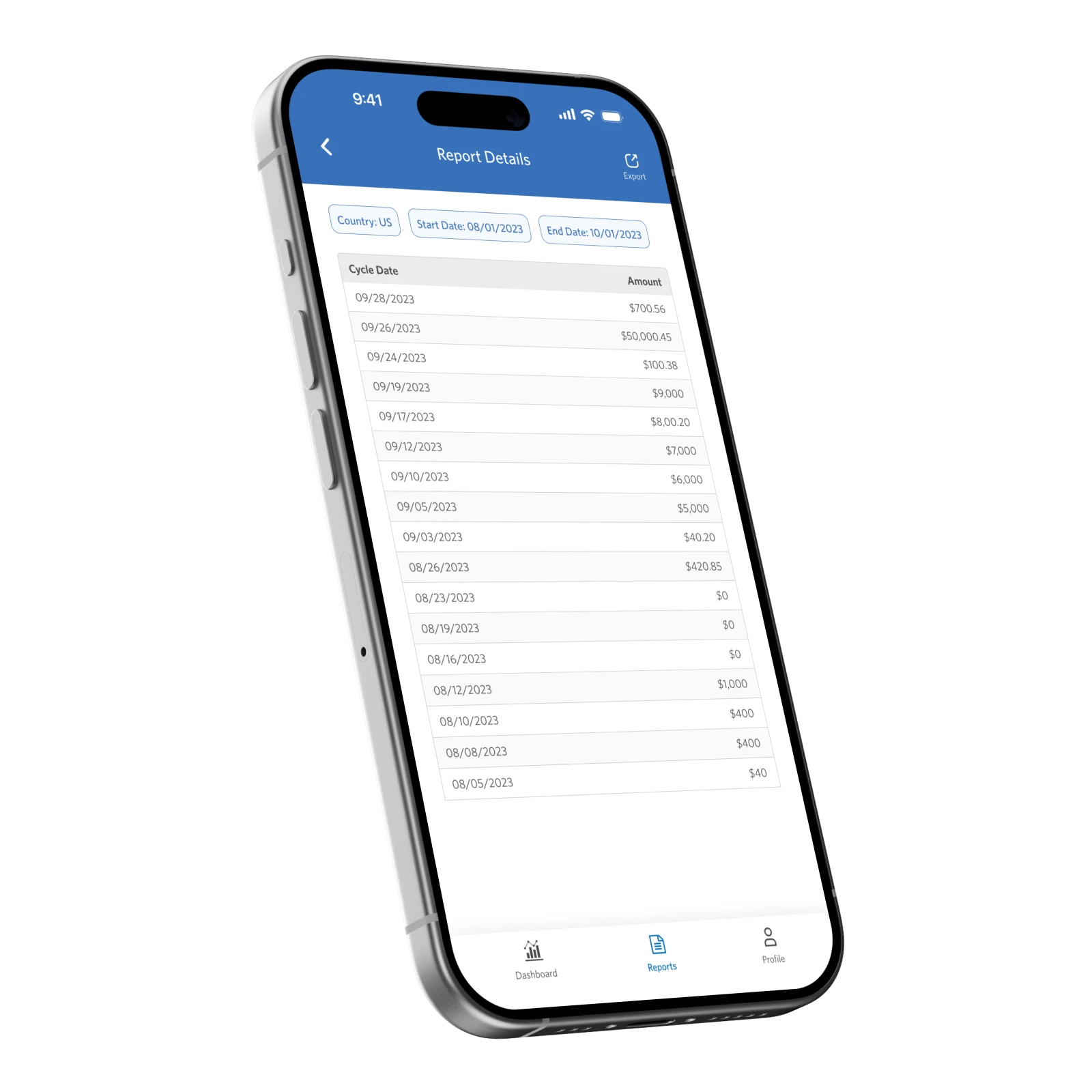
The dashboard design brings required attention, commission, cash flow, points, and recruits into one glance. The reporting screens show a path from choosing a report to setting filters, reading a compact result, and exporting it. The Cash Flow and Leaders Bulletin examples make the leader reporting needs visible in the interface.
These are presentation images of WFG 365 screens. They illustrate the design work and the reporting workflows, but do not by themselves verify which individual screens shipped or how adoption changed.
From report selection to a shareable result
These screen designs show the reports launcher, Cash Flow filters and results, PDF or Excel export, and the Leaders Bulletin flow. Open each frame to inspect the interface at full size.
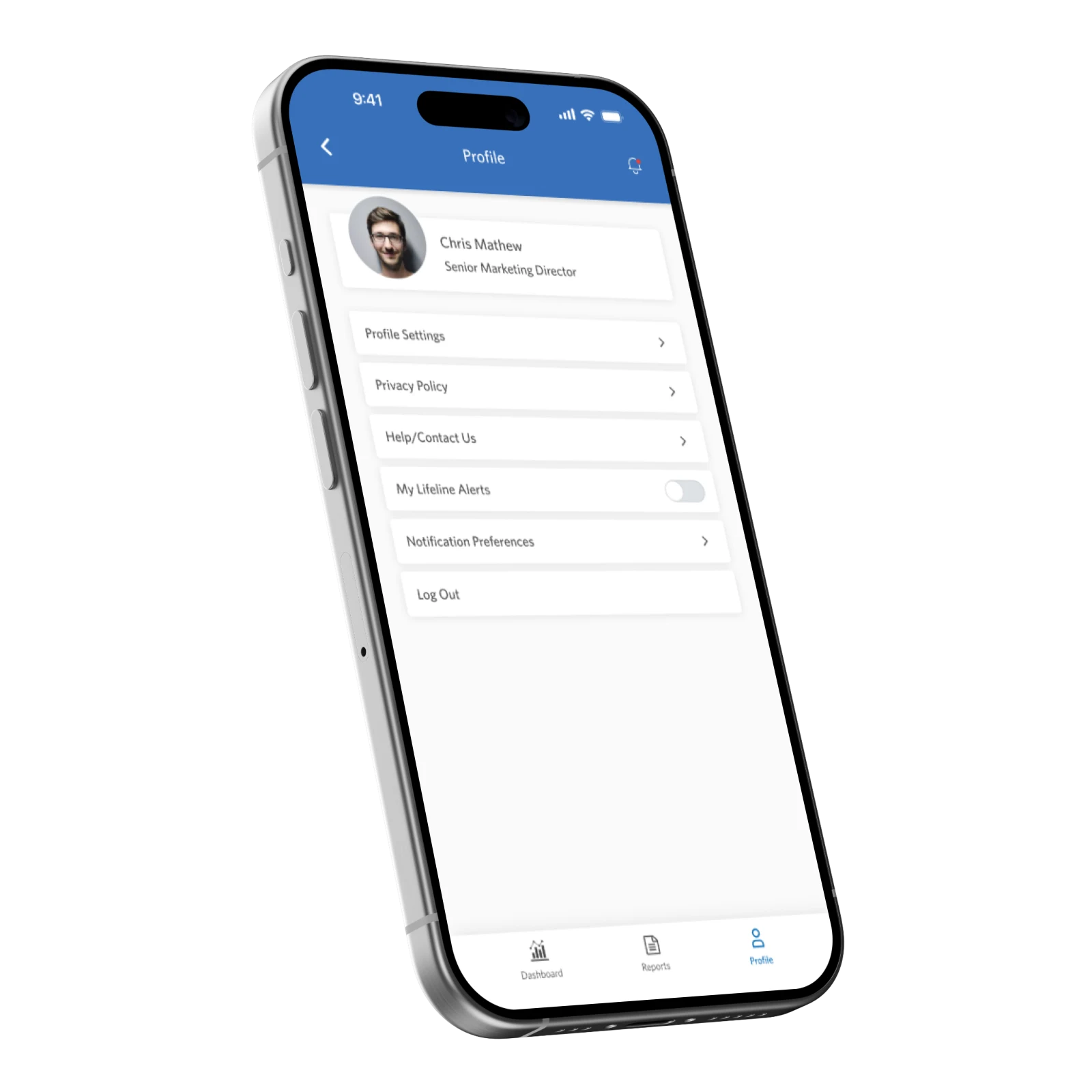
Entry and account settings
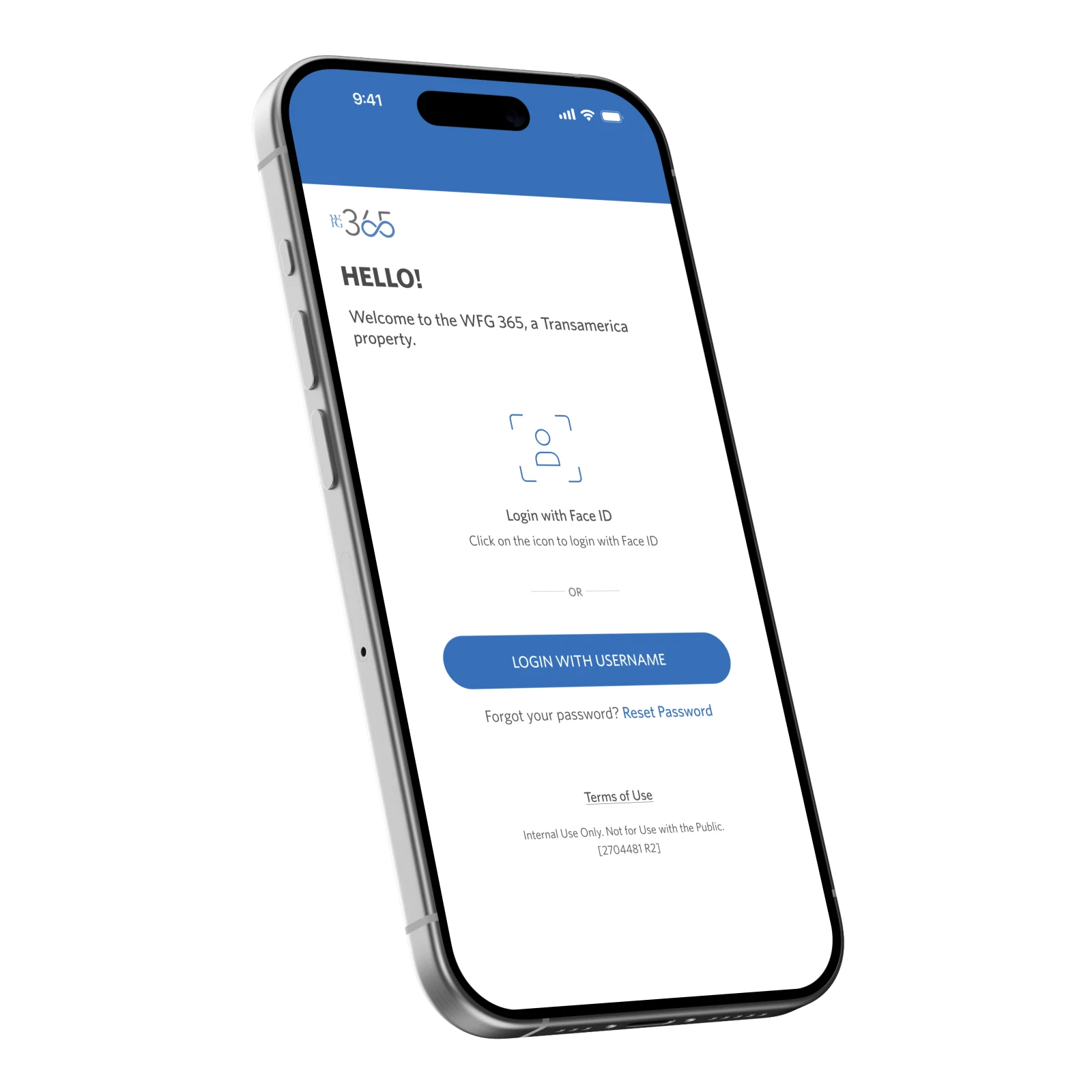
Login and profile screens round out the app context shown in the dashboard and reporting designs.
What it surfaced
The October 2023 update incorporated the leader-requested features and shipped. Adoption metrics pre- and post-update were not formally tracked, which is the honest gap in this case study — no lift percentage is claimed here. What changed was measurable in a different way: the conversation with field leaders shifted from "this doesn't work for us" to "here's what we asked for and what was addressed."
The meta-result is a documented case of what happens when a product ships without the right research, and what the recovery looks like when you go back to the source.
Factors:
- Leader requests incorporated — Specific features raised in the June 2023 session — paycheck tabs, team points and recruits tabs, compact shareable reports — shipped in the October 2023 update.
- Backlog items logged with rationale — Additional gaps surfaced in research were logged explicitly rather than dropped, giving the product team a scoped list beyond the immediate fix.
- Wireframes reviewed before handoff — Agents saw the design before development started — the step the original launch had skipped.
Lessons
- Change resistance and a feature gap look identical from a distance. The product team read agent pushback as resistance to something new. It was actually a functional gap: the tools senior leaders used daily to run their business were missing, not just unfamiliar.
- Research the people with the most to lose if it's wrong. The original launch was validated with agents who weren't the ones running large downlines. The lesson isn't "do more research" — it's research with the users whose workflow actually breaks if you get it wrong.
- Showing the design before build is cheap insurance. Presenting wireframes to agents before development handoff cost one meeting and caught gaps that would have been expensive to fix post-launch a second time.
Related WFG portal concepts
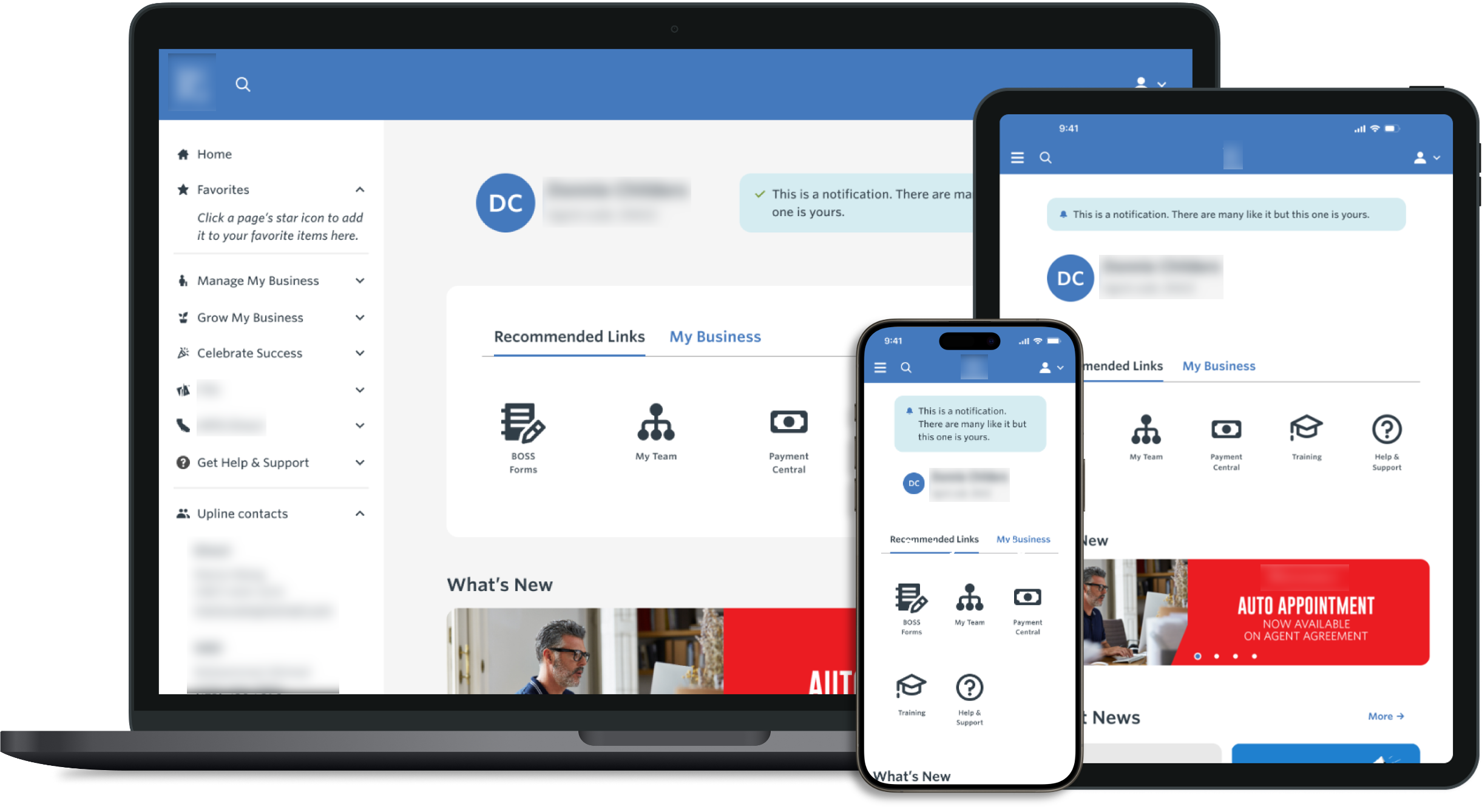
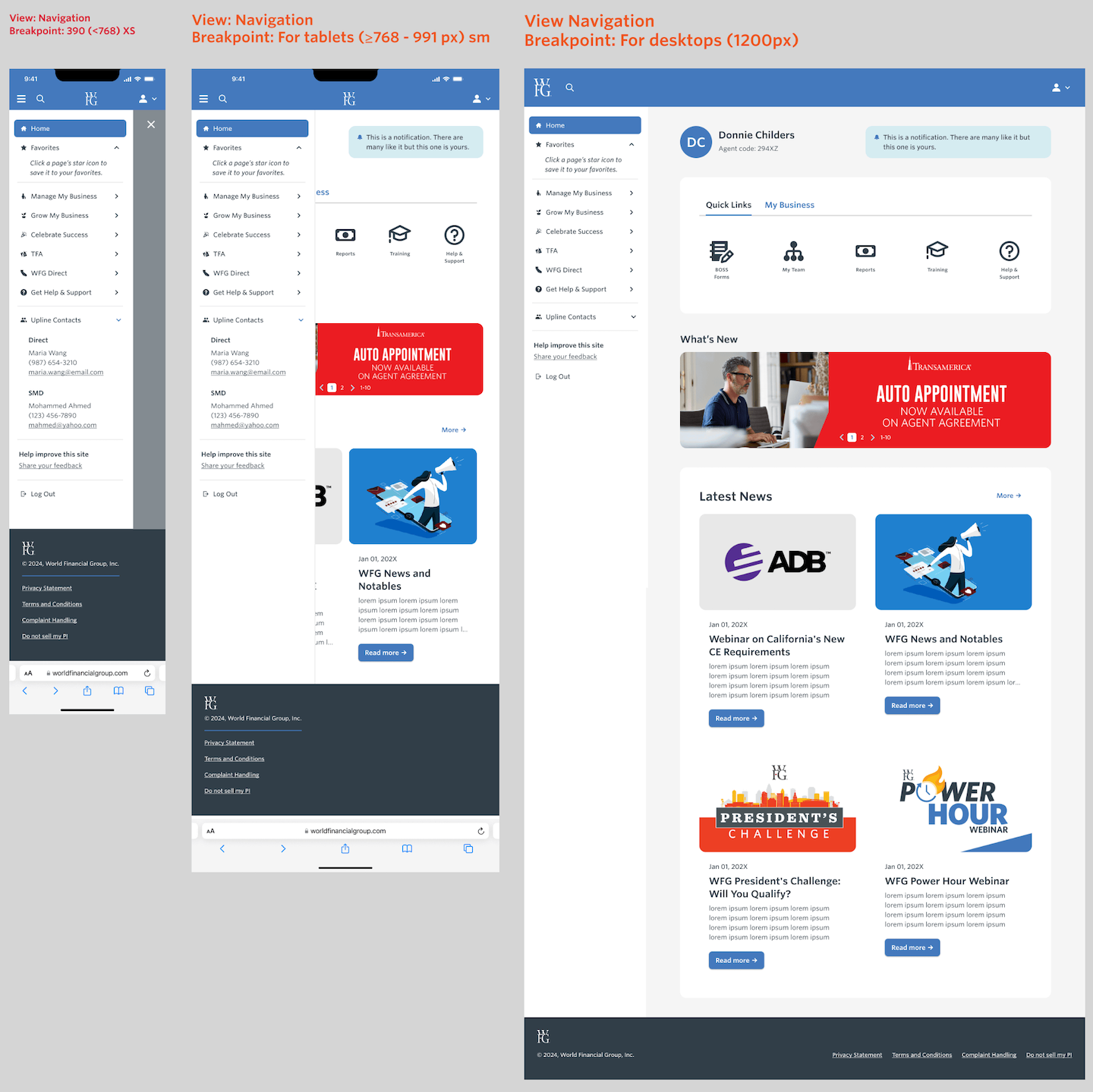
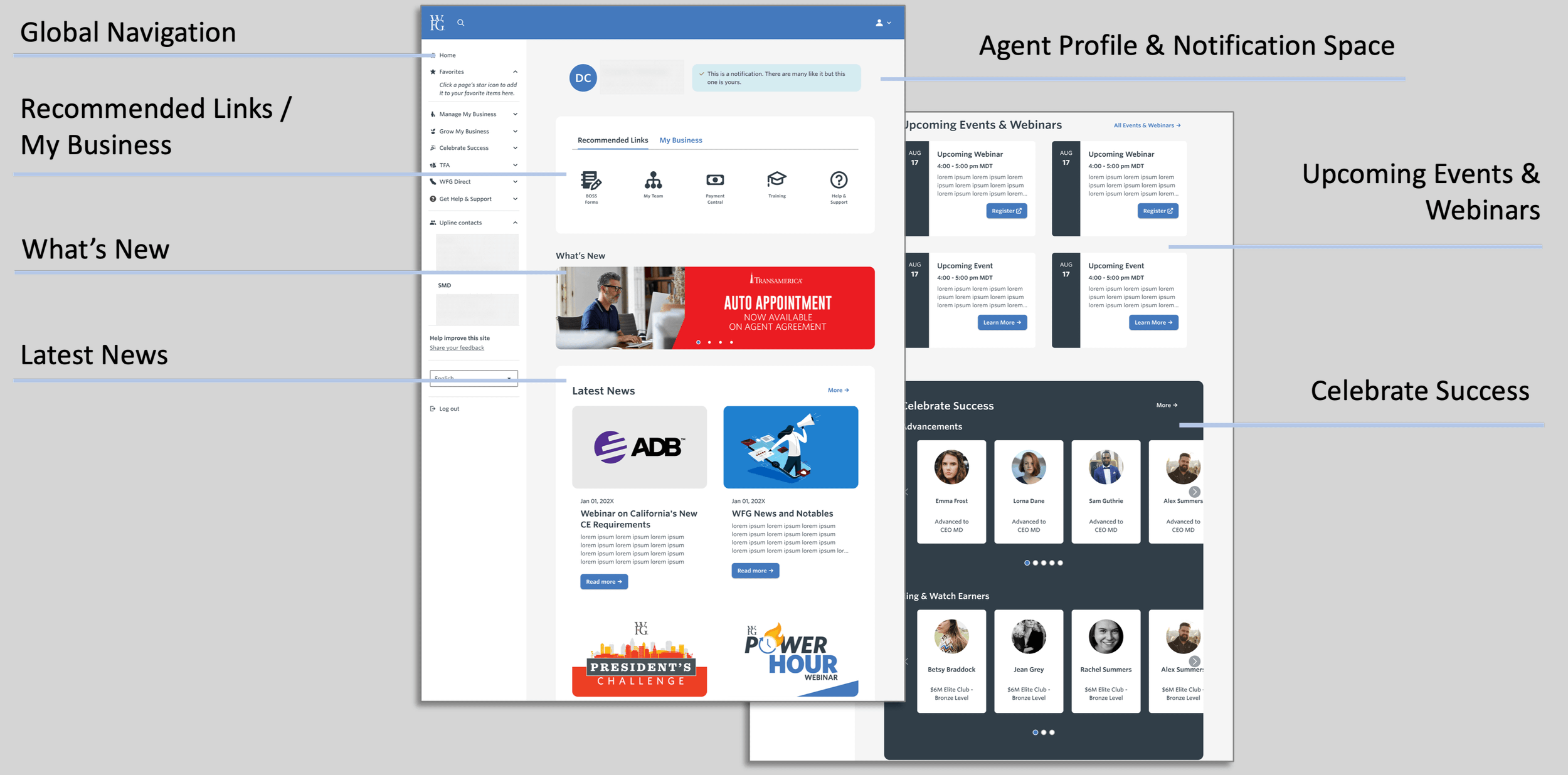
These earlier images document adjacent agent portal work. They are separate from the WFG 365 mobile app screens above.
FAQ
Did the update measurably improve adoption? Adoption metrics before and after the October 2023 update were not formally tracked, so this case study does not claim a lift percentage. What's verifiable is qualitative: the leader-requested features shipped, and the tone of field feedback shifted from rejection to acknowledgment.
Was the original WFG 365 launch a bad product? Not fundamentally — it failed because it was built and validated with feedback from one type of agent, then deployed to a much wider group with different needs. The recovery wasn't a redesign; it was going back to the leaders the first round had missed.